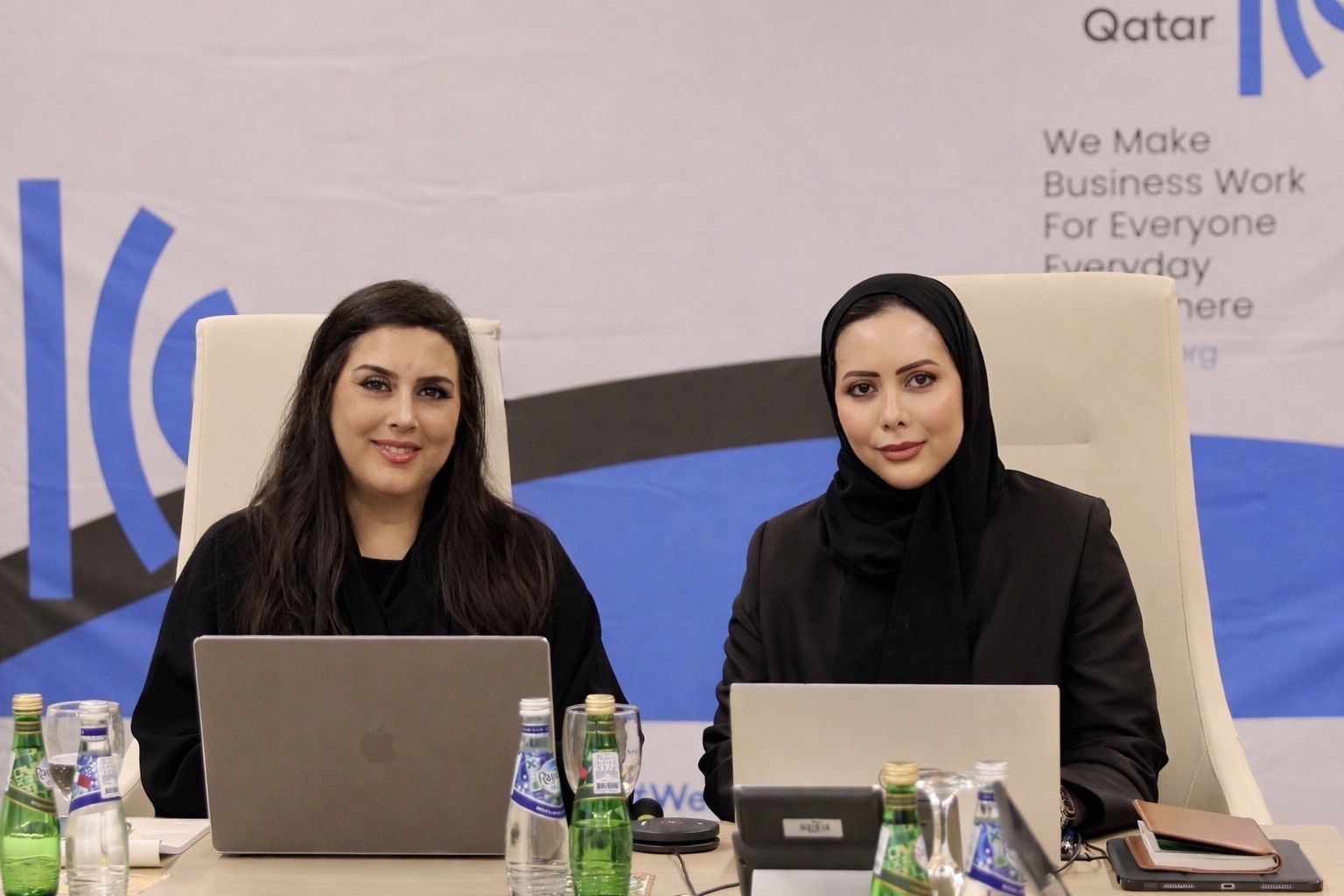
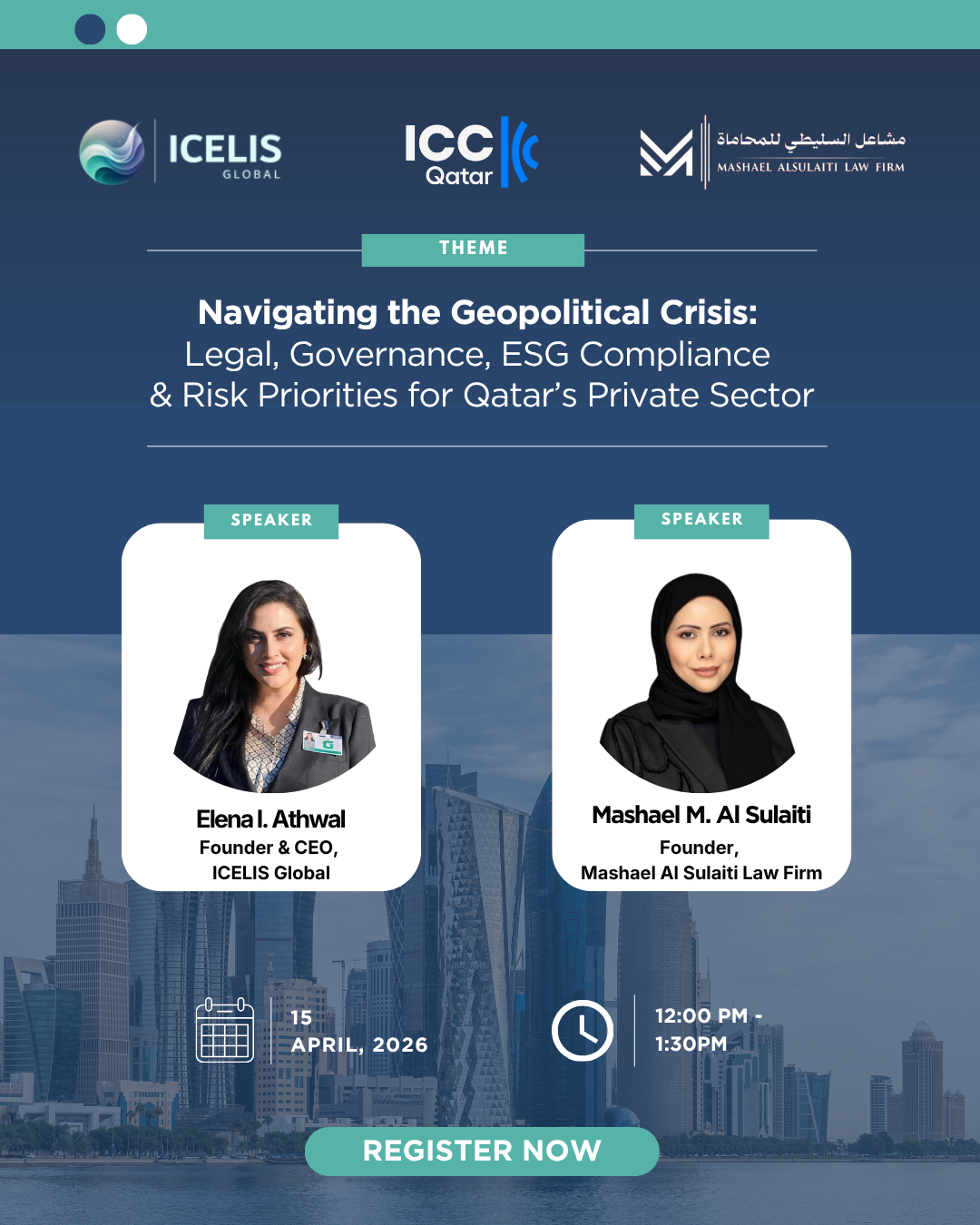
ICELIS Global Provides ESG and Compliance Expertise for Qatari Companies During ICC Qatar Webinar
Read about ICELIS Global contributions during the ICC Qatar Webinar

Integrating Biodiversity Metrics into Qatar’s ESG Reporting Frameworks
Read about the importance of biodiversity metrics and effective integration strategies for Qatar’s ESG reporting landscape.

Utilizing Real-Time Monitoring Dashboards for ESG Compliance in QSE-listed Companies
Learn about effective strategies for utilizing real-time monitoring dashboards for ESG compliance in Qatar

ICELIS Global and Mashael Al Sulaiti Law Firm Partner on ICC Qatar Webinar
Read about the ICC Qatar Webinar organized by ICC Qatar and co-organized by ICELIS Global and Mashael Al Sulaiti Law…

ESG Safeguards for Protecting Financial Institutions in Qatar
The financial sector in Qatar is not excluded from crucial decision making during regional conflicts. Learn about key ESG safeguards…

Using Digital Twins Technology in Qatar for Performance Optimization in Solar and CCS Renewable Projects
Digital twins technology in Qatar are revolutionizing energy system’s performance. Read about the positive impact on solar and CCS renewable…

GHG Emissions Reduction in Qatar: Effective Strategies for Corporate Entities
GHG emissions reduction remains a focal point in Qatar’s national vision 2030 and sustainability alignment. Read about effective strategies for…

Mastering IFRS S2 Climate-related Disclosures Including Scope 1-3 GHG Emissions for QFC-licensed Firms
QFC-licensed firms are being mandated to provide IFRS S2 climate-related disclosures in ESG reports. Read about how to to master…

Conducting Single Materiality Assessments for ESG Risks in Qatar’s Oil & Gas Sector
Single materiality assessments in Qatar’s oil and gas sector have proven crucial for alignment with IFRS reporting standards. learn about…

Qatar’s Mandatory 2026 ESG Reporting Under IFRS S1/S2 and Compliance Requirements for QFCRA and QCB Entities
The QRCA, QSE, and QCB have provided crucial reporting directives for alignment with the IFRS S1/S2 disclosure standards. Learn about…

George Amos
The News page highlights ICELIS Global’s latest engagements, thought leadership, and participation in key global events on sustainability, governance, and energy transition.